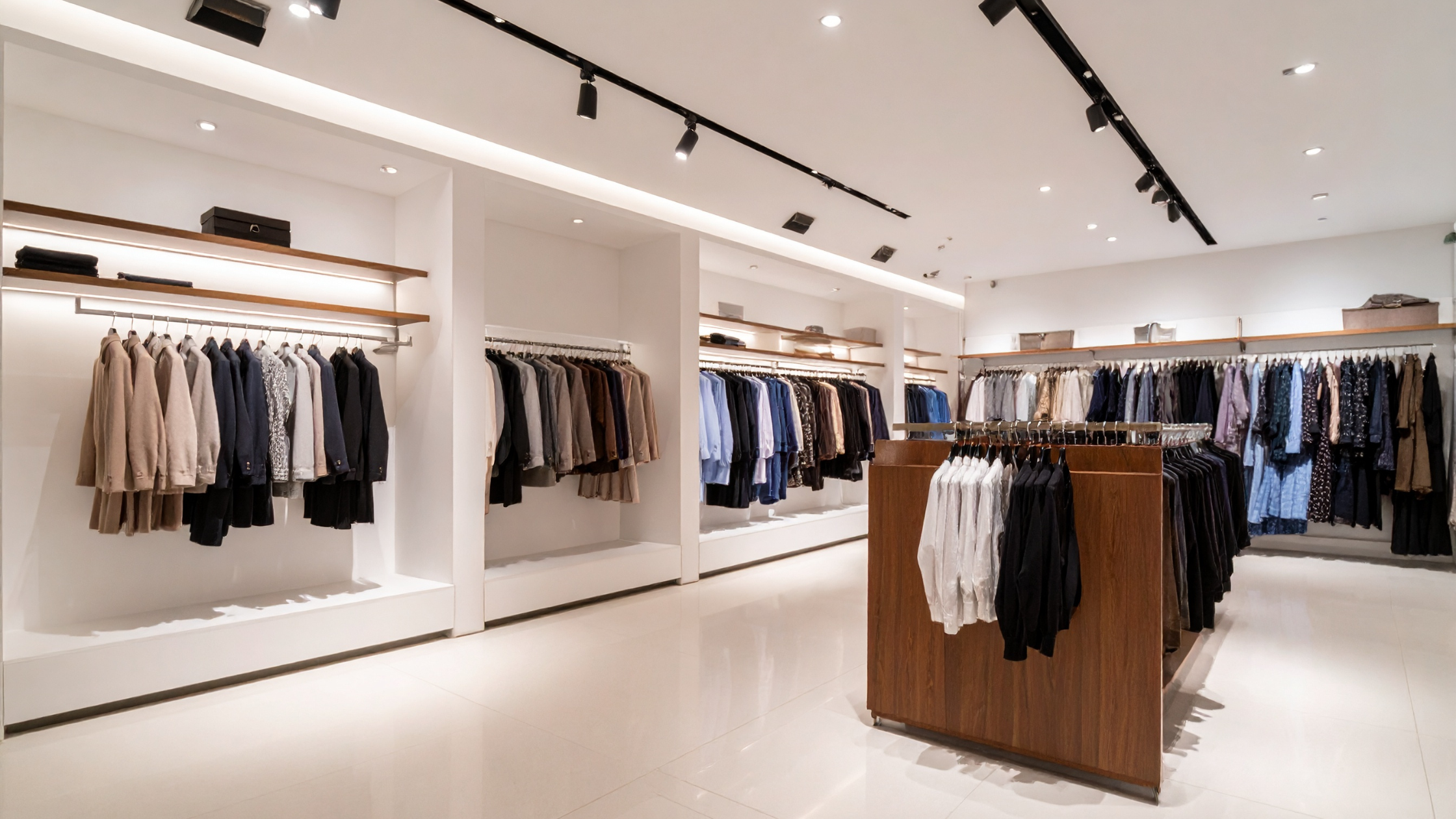
Equipping a new store is always a strategic milestone for a retail brand. Beyond design and merchandising, an operational and financial question quickly arises: should you invest in new equipment or mobilize assets already available within the network?
The decision may seem straightforward. Yet it involves significant capital, timelines, coordination, and governance considerations.
In expanding retail networks, the European Commission highlights that efficient resource management is a strategic lever for organizational performance (Circular Economy Action Plan – European Commission).
In a context where retail networks evolve rapidly — openings, relocations, renovations — the ability to equip a new store in a structured way becomes a key performance factor

Systematic Purchasing: A Fast but Costly Solution
When a new store opens, the most common reflex is to order new furniture and equipment.
This approach offers several advantages:
- Fast execution
- Visual consistency
- Logistical simplicity
However, it also implies:
- Immediate investment
- Direct impact on CAPEX budget
- An increase in total asset volume
Equipping a new store exclusively with new assets can therefore weigh down the company’s asset structure — especially when similar equipment already exists elsewhere in the network.
Mobilizing Existing Assets: An Underestimated Option
Alternatively, some retailers choose to mobilize existing equipment coming from:
- A recently renovated store
- A closed location
- A central warehouse
This approach reduces immediate spending and optimizes the use of existing resources.
However, mobilizing existing assets requires one essential condition: visibility of available assets.

The Key Question: Do You Have Reliable Visibility Over Available Assets?
Mobilizing existing equipment means being able to quickly answer several questions:
- What equipment is actually available?
- Where is it located?
- Is it in good condition?
- Can it be transferred within the required timeframe?
Without operational visibility, equipping a new store using existing assets can quickly become complex.
As a result, some retailers default to purchasing new equipment for simplicity — even when reusable assets are available.
The challenge does not lie in the intention, but in the execution capability.
A Strategic Trade-Off Between CAPEX, Timelines, and Concept Consistency
Equipping a new store involves balancing:
- Financial investment
- Speed of opening
- Brand concept consistency
- Optimization of existing assets
For finance teams, mobilizing existing assets improves capital allocation efficiency.
For retail teams, the priority remains meeting deadlines and delivering a strong customer experience.
The challenge is therefore to align financial performance with operational performance — rather than opposing them.

Structuring the Decision to Avoid Default Choices
When asset data is centralized and accessible, decision-making becomes more rational.
Teams can compare:
- The cost of purchasing new equipment
- The cost and timeline of an internal transfer
- Actual equipment availability
- The impact on opening schedules
This is precisely where solutions like CircularPlace come into play.
CircularPlace enables retailers to structure asset management through a retail asset inventory management platform, making it easier to identify available equipment across the network.
The platform acts as a visibility and execution layer: it organizes inter-store transfers, tracks equipment status, and structures store-opening decisions.
Equipping a new store no longer relies on a default purchasing reflex, but on a reliable analysis of existing resources.
Equipping a new store is not merely a logistical decision.
It is a strategic trade-off between investment, speed, and resource optimization.
When retailers gain reliable asset visibility, they can mobilize existing resources when relevant — while maintaining the flexibility to invest in new equipment when necessary.
The key lies in structuring the decision, rather than relying on default choices.