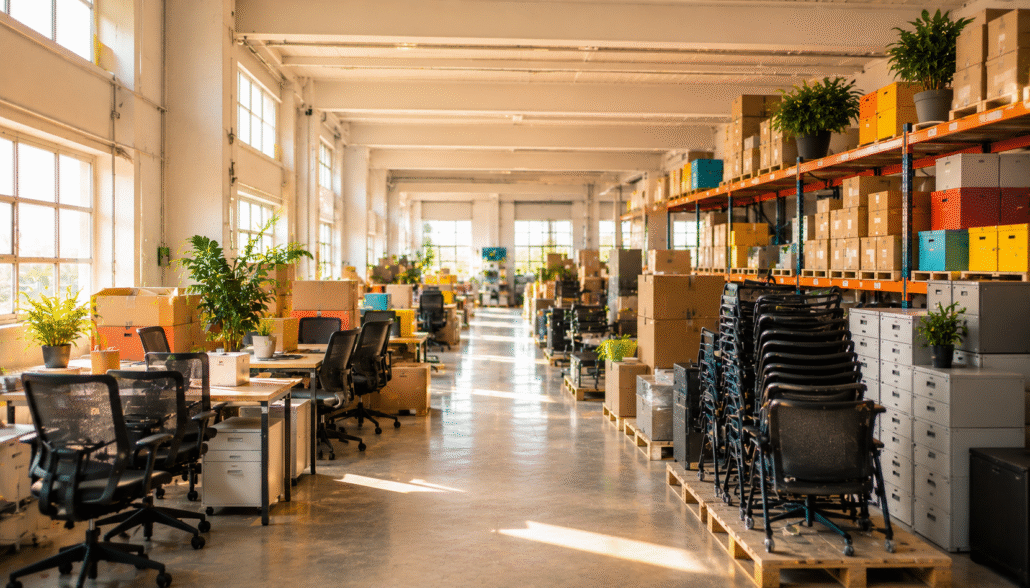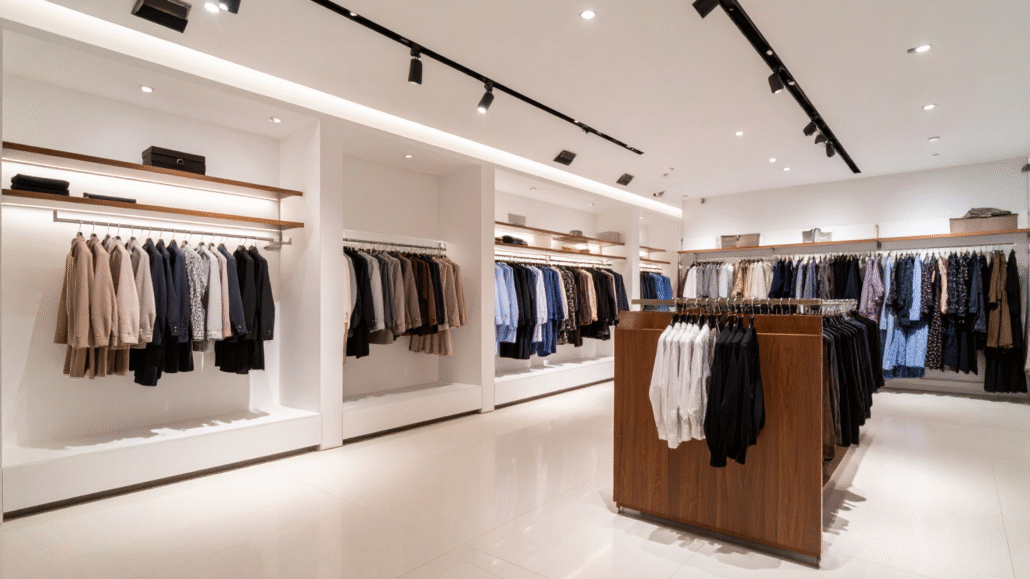
A new office often means replacing existing furniture
When a company renovates, redesigns, or moves into a new office, the focus naturally turns to what comes next: new ways of working, a better employee experience, more flexible spaces, and furniture that fits the new layout.
In many cases, this also means replacing part of the existing equipment.
That is completely normal.
The real question is not always how to keep everything. It is what to do with the office furniture and equipment the company no longer wants to keep.
Desks, chairs, storage units, partitions, monitors, and IT equipment can still have value. Even if they no longer fit the new office design, they do not automatically become useless.
A good office renovation is not only about what you buy next. It is also about what happens to what you replace.
Office furniture resale can reduce project costs
An office renovation often comes with a significant budget: new furniture, installation, works, acoustics, IT equipment, signage, and logistics.
In this context, office furniture resale can become a useful way to recover part of the value of replaced equipment.
It will not finance the entire project. But it can help offset some new purchases and avoid certain costs linked to storage, removal, or disposal.
Resale is especially relevant when the furniture is:
- in good condition
- grouped into coherent lots
- easy to transport
- still suitable for professional use
- properly photographed and described
In other words, replaced furniture does not have to be treated as a simple logistics problem. It can become a resource with remaining value.

Not everything can be sold, but everything should have a clear next step
Selling used office furniture is not always the best option.
Some items may have limited resale value but can still be useful to other organizations. In that case, donation to charities, schools, associations, or local organizations can give them a relevant second life.
Other equipment can be reused internally, especially if another office or site has a similar need.
The goal is not to send everything through the same channel. It is to choose the most relevant option for each item:
- resale when there is economic value
- donation when the social value is stronger
- internal reuse when another site can use it
- recycling only when the item can no longer be used
The European Commission explains that the circular economy aims to keep products, materials, and resources in use for as long as possible. In an office renovation project, this means avoiding a simple mistake: treating useful furniture as waste just because it no longer fits the new layout.
“The question is not how to keep everything. It is how to avoid losing the value of what the company no longer keeps.”
The best time to decide is before furniture is removed
In many office renovation projects, the future of old furniture is considered too late.
Once desks, chairs, partitions, or storage units have been dismantled, mixed together, moved, or placed in storage, the available options become harder to activate. Photos are missing, information gets lost, lots are no longer clear, and logistics costs increase.
When the decision is made earlier, the company can better prepare:
- furniture that can be resold
- equipment that can be donated
- items that can be reused in another office
- assets that need to be removed from the asset base
“The earlier the decision is made, the easier it becomes to give furniture a second life.”
This preparation also makes the renovation project easier to manage. The company knows what will be replaced, what can still be used, and what really needs to leave the site.
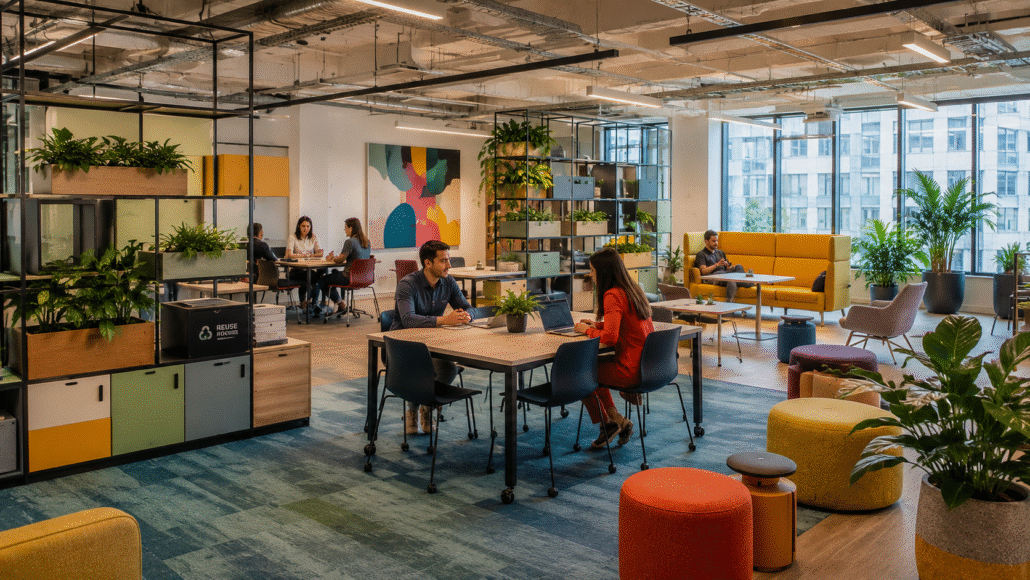
A second life depends on good information
To resell, donate, or reuse office furniture, it is not enough to know that the furniture exists.
Teams need clear information about:
- condition
- quantity
- location
- dimensions
- availability
- photos
- potential resale value
Without this information, furniture becomes difficult to use, sell, or donate. It may still have value, but that value becomes harder to activate.
The U.S. Green Building Council highlights that material reuse and flexible design can help reduce the environmental impact of interior spaces over their life cycle. This idea applies directly to office renovation projects: the better companies qualify existing resources, the easier it becomes to give them the right second life.
Where CircularPlace fits into this approach
In this context, CircularPlace helps organizations structure the second life of office furniture and professional equipment.
The platform centralizes asset information, tracks status, and helps direct each item toward the most relevant option: internal reuse, B2B resale, donation to associations, or recycling.
The goal is not to keep all old furniture.
It is to give a second life to what the company no longer keeps, while reducing avoidable costs linked to storage, transport, disposal, or unnecessary new purchases.
To explore this approach, you can visit CircularPlace or request a demo.
What you replace can still have value
An office renovation is not only about choosing new furniture.
It also creates an important decision point for everything leaving the old space.
Some items can help reduce the net cost of the project through resale. Others can be reused elsewhere. Others can be donated.
The question is not: how do we keep everything?
The better question is: how do we make sure the furniture we do not keep does not lose all its value?
That is what turns an office renovation into an opportunity to recover value, reduce waste, and make better use of existing resources.